


Best Books for Spiritual Growth: A 2026 Reading Guide
Table of Contents
- How to Choose the Best Books for Spiritual Growth
- Spiritual Books for Beginners: Where to Start
- Books on Meditation and Mindfulness for Daily Practice
- Christian Spiritual Growth Books for Faith and Contemplation
- Spiritual Fiction Books That Teach Through Story
- Building a Structured Reading Path for Personal Transformation
- Conclusion: Your Next Step on the Spiritual Growth Journey
- Frequently Asked Questions
Last Updated: October 14, 2026
How to Choose the Best Books for Spiritual Growth
The best books for spiritual growth are the ones that match where you are right now, not where you think you should be. That single idea shapes this entire guide from Melissa Shubha Abbott.
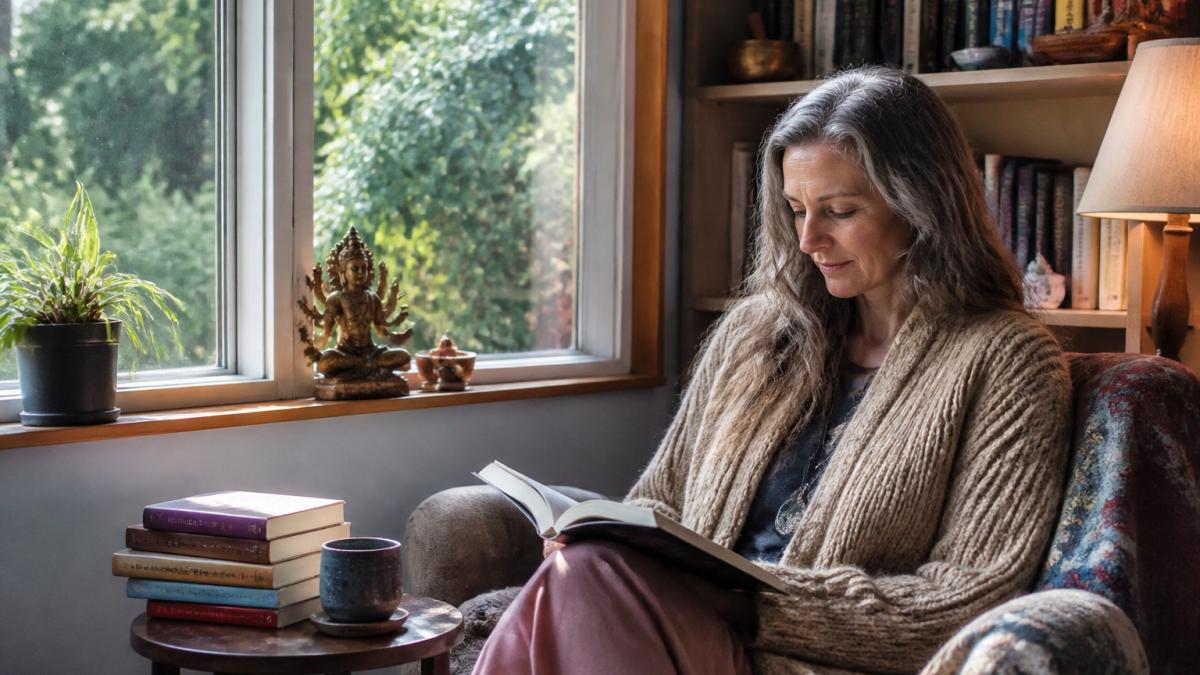
Spiritual growth is the ongoing process of deepening your sense of purpose, meaning, and connection through practice, reflection, and study.
Most readers get this wrong. They buy five books at once, start all of them, and finish none. A common mistake is treating a reading list like a to-do list instead of a practice.
Selection Criteria That Actually Matter
Four questions separate a book you will finish from one you will abandon:
- Does it match your level? A beginner needs plain language and short chapters.
- Does it match your tradition? Christian readers may want devotional depth. Others may want Buddhist or contemplative works.
- Does it ask something of you? The best books include reflection or practice, not just ideas.
- Can you actually read it now? Audio, print, or ebook all count. Format matters more than people admit.
Spiritual Books for Beginners: Where to Start
Start with one book, not ten. Beginners do best with short chapters, plain language, and a single practice to try each week.
Spiritual books for beginners should feel like a conversation, not a lecture. Look for authors who explain terms instead of assuming them.
Accessible introductions, by tradition and approach:
- Christian devotional and contemplative entry points. The Practice of the Presence of God by Brother Lawrence is short, plain, and built around one idea, carrying awareness of the divine into ordinary chores. Celebration of Discipline by Richard J. Foster is longer and more structured, with chapters on prayer, fasting, and service; it suits readers who want a study plan rather than a single daily reading. The Imitation of Christ by Thomas à Kempis remains one of the most reprinted devotional works in English and works well read one short section at a time.
- Mindfulness and meditation without religious framing. Wherever You Go, There You Are by Jon Kabat-Zinn introduces mindfulness in plain American English and pairs each short chapter with a practice. The Miracle of Mindfulness by Thich Nhat Hanh is even shorter and reads like a letter; it is a common first book for readers who want meditation instruction without doctrine.
- General spirituality and inner work. The Road Less Traveled by M. Scott Peck opens with the line "Life is difficult" and builds a case for discipline, grace, and growth that readers from many backgrounds find usable. The Power of Now by Eckhart Tolle is widely recommended but denser than its reputation suggests, better as a second or third book than a first.
- Wisdom through story. The Alchemist by Paulo Coelho and Siddhartha by Hermann Hesse are short novels that carry spiritual themes through narrative. They are the easiest on-ramp for readers who lose focus with instructional prose.
- Learn About Reiki Healing
Reading level and length, at a glance:
|
Title |
Approx. length |
Best for |
Format notes |
|---|---|---|---|
|
The Practice of the Presence of God |
Under 100 pages |
Absolute beginners; busy schedules |
Print, ebook, audiobook |
|
The Miracle of Mindfulness |
Under 150 pages |
Meditation first-timers |
Print, ebook, audiobook |
|
The Alchemist |
Under 200 pages |
Readers who prefer story |
Print, ebook, audiobook |
|
Celebration of Discipline |
200-300 pages |
Readers who want structure |
Print, ebook, audiobook |
|
The Road Less Traveled |
300+ pages |
Readers ready for longer reflection |
Print, ebook, audiobook |
Here is a simple starting path:
- Pick one book on prayer, meditation, or mindfulness, from the list above, not from a bestseller shelf.
- Read one chapter per day, no more.
- Write three sentences in a journal after each chapter.
- Finish the whole book before buying another.
That last step is the hard one. It is also the step that changes people.
Many readers find that a slower pace with one book beats a fast skim of five. Depth comes from repetition, not volume.
Books on Meditation and Mindfulness for Daily Practice
Books on meditation and mindfulness work best when they give you a script you can follow the same day. Theory is useful. A five-minute practice you actually do is better.
Look for these features before you buy:
- A clear posture instruction (sitting, walking, or lying down)
- A set time length for each session
- Guidance on what to do when your mind wanders
- Short chapters you can revisit without losing your place
Titles that deliver a usable practice:
- Mindfulness in Plain English by Bhante Henepola Gunaratana. Written by a Buddhist monk for Western readers, it explains insight meditation step by step and is unusually direct about the obstacles beginners hit, restlessness, doubt, and the urge to quit. Best for readers who want one method explained thoroughly rather than a sampler.
- The Miracle of Mindfulness by Thich Nhat Hanh. Short, warm, and built around everyday activities: washing dishes, walking, breathing. The practice it leaves you with is a single anchor, your breath, applied to ordinary tasks. Best for readers who want to start today with no equipment and no cushion.
- Wherever You Go, There You Are by Jon Kabat-Zinn. Each chapter is a few pages and ends with a concrete suggestion. Kabat-Zinn developed the Mindfulness-Based Stress Reduction program at the University of Massachusetts Medical School, and the book reflects that clinical, secular framing. Best for readers who want mindfulness without religious language.
- The Untethered Soul by Michael A. Singer. Less instruction, more inquiry into the relationship between you and your thoughts. Best as a companion to a practice book, not a replacement, it explains why you meditate more than how.
- Real Happiness by Sharon Salzberg. A 28-day program with a defined practice for each day, which makes it the easiest of these to use as a structured month. Best for readers who want a schedule rather than open-ended guidance.
What each book asks of you, in practice:
|
Title |
Daily commitment |
Practice you keep |
|---|---|---|
|
Mindfulness in Plain English |
20-30 minutes |
Breath-focused insight meditation |
|
The Miracle of Mindfulness |
5-10 minutes |
Breath awareness during daily tasks |
|
Wherever You Go, There You Are |
5-15 minutes |
Short guided reflections |
|
The Untethered Soul |
10-20 minutes |
Self-inquiry and observation |
|
Real Happiness |
10-20 minutes |
A 28-day structured program |
Time estimates are typical, not required, the point is to pick a book whose default commitment matches the minutes you actually have.
Yoga teachers often need more than inspiration. They need instructional scripts they can adapt for a class, with philosophical context behind each cue. That is a different kind of book than a memoir about someone's meditation journey.
Christian Spiritual Growth Books for Faith and Contemplation
Christian spiritual growth books serve a distinct purpose: they connect daily reading to prayer, scripture, and community life. The best ones hold up across decades because they focus on practice, not trends.
Two broad categories are worth knowing:
- Devotional works with short daily readings and reflection questions
- Contemplative and mystical works that move slowly and ask for patience
Contemplative reading is not the same as study. You read a page, then sit with it. Many readers find that one page a day, read slowly, does more than a chapter skimmed before bed.
If you are part of a church group or book circle, a devotional with discussion questions saves you preparation time. The United States Conference of Catholic Bishops publishes reading and reflection resources that many groups use to structure discussion.
Spiritual Fiction Books That Teach Through Story
Spiritual fiction books carry wisdom through narrative rather than instruction.
This is where Melissa Shubha Abbott's work fits naturally. Her historical novels, including The Witches of Gloucester series, explore themes of history, spirituality, and personal transformation through story.
Melissa Shubha Abbott also writes instructional guides on yoga, meditation, and Vajrayana Tibetan Buddhist Goddess Tara practice. The fiction and the guides serve different readers, and that is the point.
If you are unsure which fits you, ask one question: do you want to feel your way to an insight, or be shown the steps?
Building a Structured Reading Path for Personal Transformation
A structured reading path turns scattered reading into real personal transformation. The framework below moves from practice to reflection to story, so each stage builds on the last.
|
Stage |
Focus |
Time per Day |
What to Read |
|---|---|---|---|
|
1. Foundation |
One practice |
10 minutes |
A beginner meditation or prayer guide |
|
2. Reflection |
Journaling |
5 minutes |
A devotional or contemplative work |
|
3. Depth |
Study |
15 minutes |
A book on your specific tradition |
|
4. Integration |
Story |
20 minutes |
Spiritual fiction or memoir |
Spend two to four weeks at each stage. Move on when the practice feels steady, not when the book ends.
Practical takeaways and exercises make this path stick:
- Choose one book for stage one and finish it
- Set a fixed time and place for reading
- Keep a journal with three sentences per session
- Review your notes at the end of each week
- Only then choose your next book
For readers who want to go deeper, Harvard Divinity School offers public resources on world religious traditions that help you place any book in its wider context.
Conclusion: Your Next Step on the Spiritual Growth Journey
The hardest part of any reading path is not finding the best books for spiritual growth. It is staying with one long enough for it to change you.
Melissa Shubha Abbott offers both sides of that path: historical novels that carry wisdom through story, and instructional guides for yoga, meditation, and Vajrayana Buddhist practice. Personalized copies are available through the Etsy store, and Melissa Shubha Abbott is available for in-person and Zoom book talks and signings for book clubs and circles.
Get started with Melissa Shubha Abbott and give your reading practice a foundation that holds.
Frequently Asked Questions
What are the best spiritual growth books for beginners?
Start with accessible titles that blend personal stories with practical guidance. Look for books on meditation and mindfulness that include simple exercises, or spiritual fiction that introduces wisdom through narrative. Beginners benefit most from books that avoid heavy jargon and offer clear entry points. A good starting path: one meditation guide, one memoir-style spiritual book, and one work of spiritual fiction to keep the reading experience varied and engaging.
Are there spiritual books that include meditation practices?
Yes, many books on meditation and mindfulness include guided practices, breathing exercises, and reflection prompts. Instructional guides written by experienced teachers often pair philosophy with step-by-step meditation instructions. When choosing, check whether the book offers practices suited to your experience level, whether it covers a specific tradition like Vajrayana Buddhism, and whether the exercises build progressively so you can develop a sustainable daily practice rather than just reading about meditation.
How do Christian spiritual growth books differ from general spirituality titles?
Christian spiritual growth books focus on faith, prayer, contemplation, and a relationship with God within the Christian tradition. They often explore contemplative works by authors like Richard Rohr or classic devotional writers. General spirituality titles may draw from multiple traditions, including Buddhism, yoga philosophy, or New Age thought. Both can support personal transformation, but Christian books speak directly to readers who want their reading to align with their faith and church community.
How can I build a reading path for spiritual growth?
A structured reading path works better than random selection. Start with one foundational book for beginners, add a meditation or mindfulness guide for daily practice, include a Christian or contemplative work if faith is central to your journey, and rotate in spiritual fiction for inspiration. Read one book at a time, journal after each chapter, and revisit key passages. This approach turns reading into a practice rather than a pile of unfinished books.